

How Much Money Do You Need to Start Trading Forex?
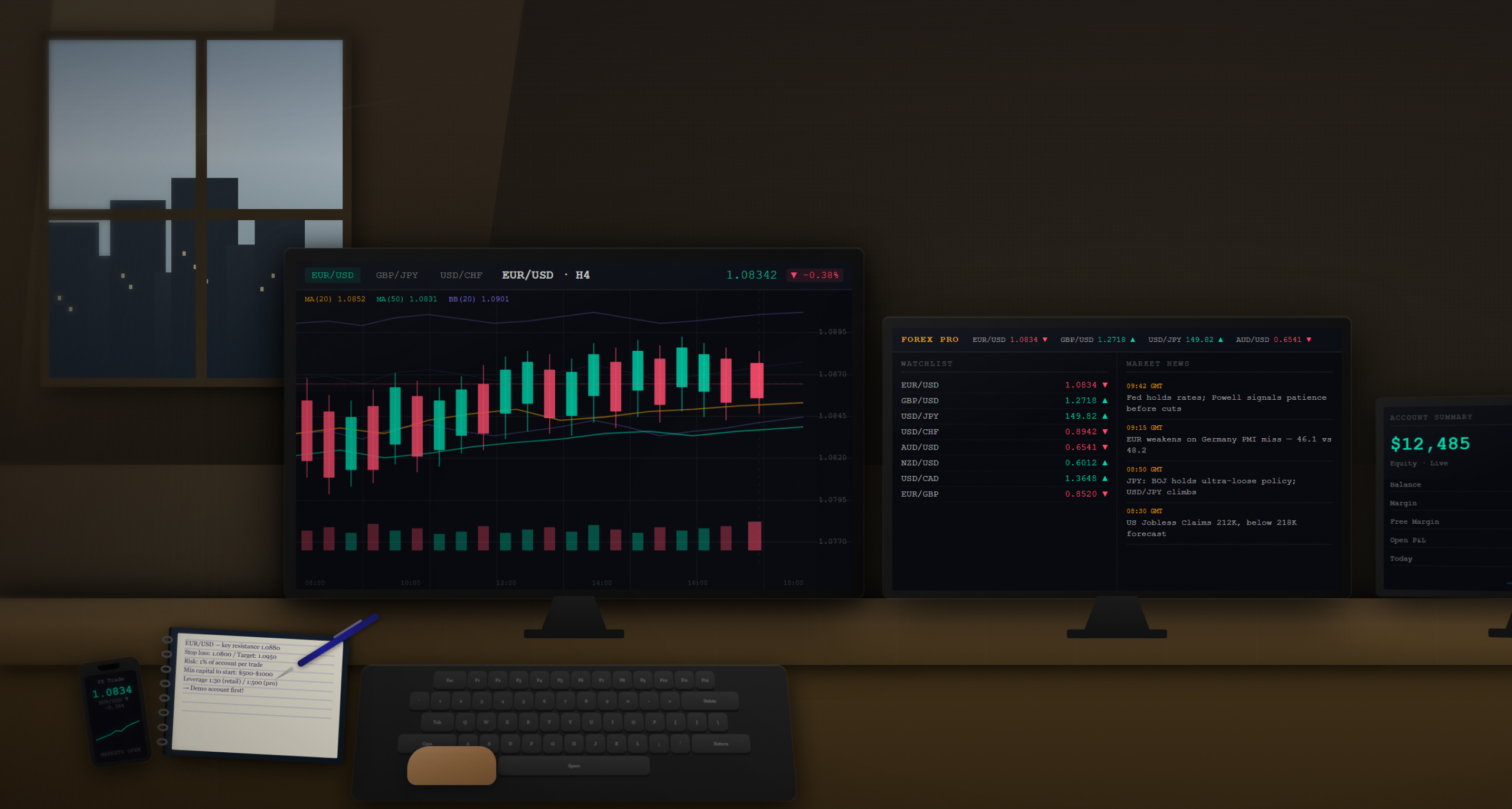
At ICunity, one of the most common questions from beginners is: “How much money do I need to start trading Forex?” The honest answer is that there is no one-size-fits-all figure. The amount depends on your trading goals, risk tolerance, strategy, and the type of account you open.
Are you ready to transform your financial future?
Sign Up TodayNo credit card required • Free demo account • Instant activation
Understanding the minimum requirements and how to manage your capital effectively is crucial to avoid unnecessary losses and develop consistent trading habits.
Minimum Account Requirements
Most Forex brokers allow traders to open accounts with very low deposits — sometimes as little as $50 to $100. These are often called micro or mini accounts, and they let traders test the market without risking large amounts.
However, having a small account comes with challenges:
- Higher relative risk per trade
- Limited flexibility in position sizing
- Potentially higher transaction costs as a percentage of capital
While it’s possible to start small, small accounts require careful money management.
The Role of Leverage
Forex brokers often offer leverage, which allows you to control larger positions with a small amount of capital. For example:
- With 1:100 leverage, $500 lets you trade $50,000 in currency
- With 1:50 leverage, $1,000 lets you trade $50,000
Leverage can magnify profits — but it can also magnify losses. Many beginners make the mistake of using too much leverage, which can wipe out their accounts quickly.
At ICunity, we always emphasize: risk management is more important than account size.
Recommended Starting Capital
While you can start with $100, a more realistic amount for learning and practicing risk control is usually $500 to $1,000. This allows:
- Proper risk management (1–2% per trade)
- Testing strategies without extreme stress
- The ability to survive losing streaks while learning
Remember, trading is not about starting big — it’s about staying in the market long enough to learn and improve.
Risk Per Trade
A key rule for beginners is to never risk more than 1–2% of your account on a single trade.
For example:
- If your account is $500, risk per trade = $5–$10
- If your account is $1,000, risk per trade = $10–$20
This ensures that even a series of losing trades won’t wipe out your capital.
The Importance of Education
Starting with sufficient capital is only one part of success. Education and experience are critical:
- Learn technical and fundamental analysis
- Practice on a demo account first
- Develop a clear trading strategy
- Understand market risks and leverage
Even traders with $10,000 accounts can fail without proper education and discipline.
Starting Small and Scaling Up
Many professional traders started small and gradually increased their capital as their skills improved. The process is simple:
- Start with a manageable amount
- Focus on consistent profits
- Scale up gradually as confidence and skill grow
This approach reduces emotional pressure and helps build a strong foundation.
Final Thoughts
At ICunity, we encourage beginners to focus on learning and risk management rather than trying to start with a large account. You don’t need thousands of dollars to begin — you need the right mindset, proper education, and a disciplined approach.
A modest account, careful risk control, and consistent practice can lead to long-term success in Forex trading. The money you start with is less important than how you manage it.