

Price Action Trading: A Complete Beginner’s Guide
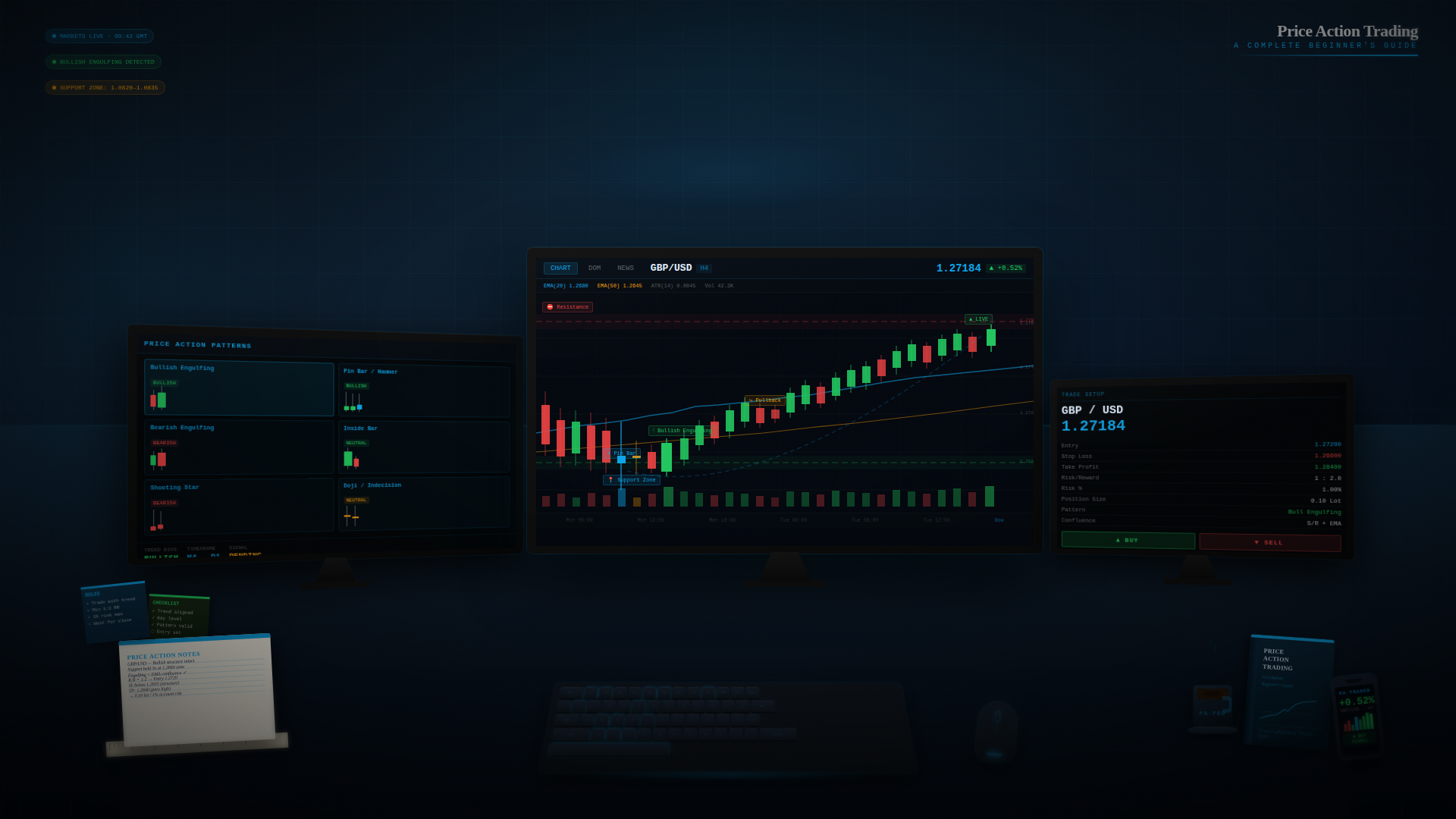
At ICunity, we often emphasize the importance of understanding market behavior before relying on complex indicators. One of the most popular methods for achieving this is price action trading — a strategy that focuses on analyzing the movement of price itself, rather than relying heavily on technical indicators.
Are you ready to transform your financial future?
Sign Up TodayNo credit card required • Free demo account • Instant activation
For beginners, mastering price action can provide a clear, disciplined, and flexible approach to trading.
What Is Price Action Trading?
Price action trading is the study of historical price movements to make trading decisions. Traders observe patterns, support and resistance levels, and candlestick formations to predict future market behavior.
Unlike indicator-based strategies, price action relies on raw market data, offering a clearer picture of supply and demand dynamics.
In simple terms: you trade what you see, not what an indicator tells you.
Why Beginners Should Learn Price Action
Price action trading is ideal for beginners because:
- Simplicity – You don’t need dozens of indicators or complicated algorithms.
- Flexibility – Works across all markets: Forex, stocks, commodities, and cryptocurrencies.
- Focus on Market Psychology – Teaches you how buyers and sellers behave.
- Risk Management-Friendly – Clear levels help define stop-loss and take-profit points.
Even professional traders like Warren Buffett emphasize understanding fundamentals and market behavior before overcomplicating trades — price action provides a similar foundation for technical analysis.
Key Concepts in Price Action Trading
1. Support and Resistance
- Support: A price level where buying interest is strong enough to prevent the price from falling further.
- Resistance: A price level where selling pressure prevents the price from rising further.
Price action traders look for price reactions at these levels to identify potential trade opportunities.
2. Candlestick Patterns
Candlestick formations provide visual insight into market sentiment. Some common patterns include:
- Pin Bar: Indicates potential reversals.
- Engulfing Candle: Suggests strong market momentum in one direction.
- Inside Bar: Signals consolidation and possible breakout.
By studying candlesticks in context, beginners can anticipate price moves without relying on lagging indicators.
3. Trend Analysis
Understanding whether the market is trending or ranging is crucial:
- Uptrend: Higher highs and higher lows
- Downtrend: Lower highs and lower lows
- Range-bound: Price moves sideways between support and resistance
Price action traders align their trades with the trend for higher probability setups.
4. Price Action Setups
Some common setups include:
- Breakouts: When price moves decisively beyond support or resistance.
- Pullbacks: Entering trades after a temporary retracement in a trend.
- Reversals: Identifying points where price is likely to change direction.
The key is waiting for confirmation before entering a trade to reduce risk.
Risk Management in Price Action Trading
Even the best price action setup can fail. Beginners must manage risk carefully:
- Risk only 1–2% of your account per trade
- Use stop-losses near support/resistance levels
- Avoid trading during high-volatility news events without a plan
- Focus on reward-to-risk ratios of at least 2:1
Discipline in risk management is what separates successful traders from beginners.
Advantages of Price Action Trading
- Works on all timeframes – from 1-minute charts to daily charts
- Reduces indicator clutter and confusion
- Helps traders read market sentiment directly
- Encourages patience and discipline
Beginners who master price action often find it easier to adapt to different market conditions than traders relying solely on indicators.
Tips for Beginners
- Start with a demo account to practice identifying support, resistance, and candlestick patterns.
- Keep a trading journal to track setups, wins, and losses.
- Focus on one market first, like Forex or a specific stock, before expanding.
- Study historical charts to understand how price reacts in different scenarios.
- Be patient – price action mastery takes time, but it builds a strong foundation.
Final Thoughts
At ICunity, we emphasize that trading is as much about understanding human behavior as it is about numbers. Price action trading equips beginners with the skills to read the market objectively, make informed decisions, and develop confidence in their trades.
By focusing on price movement, trends, and patterns — combined with disciplined risk management — beginners can build a solid foundation for long-term trading success.
Price action is not a shortcut to profits, but it is a powerful tool for those willing to learn the language of the market.