

What Is a Pip in Forex Trading? Simple Explanation
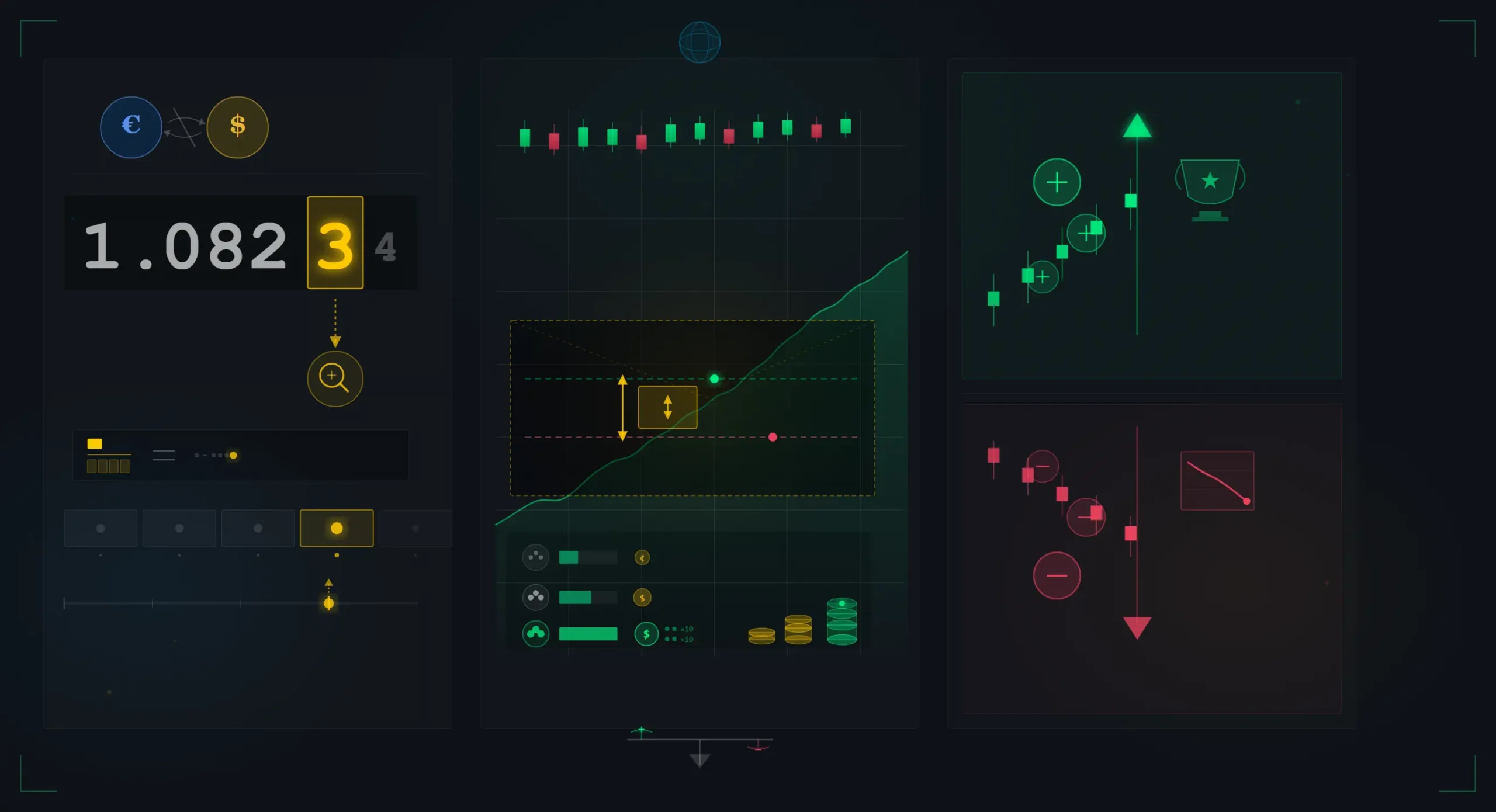
At ICunity, one of the first concepts every beginner must understand is the pip. It may sound technical, but it’s actually very simple—and extremely important.
Are you ready to transform your financial future?
Sign Up TodayNo credit card required • Free demo account • Instant activation
A pip is the basic unit used to measure price movement in the Forex market. Once you understand pips, you can better calculate profits, losses, and risk.
What Does “Pip” Mean?
Pip stands for “Percentage in Point” or “Price Interest Point.”
In most currency pairs, a pip is the smallest standard movement in price, usually the 4th decimal place.
Simple Example
Let’s say you are trading EUR/USD:
- Price moves from 1.1000 → 1.1005
- That is a movement of 5 pips
Another example:
- Price moves from 1.2050 → 1.2040
- That is a movement of 10 pips down
So, pips measure how much the price has moved.
Exception: Japanese Yen (JPY) Pairs
For currency pairs that include the Japanese yen (like USD/JPY), a pip is usually the 2nd decimal place.
Example:
- Price moves from 110.00 → 110.25
- That is 25 pips
Why Pips Matter in Trading
Pips are essential because they help you:
- Measure profit and loss
- Set stop-loss and take-profit levels
- Calculate risk per trade
- Compare price movements
Without understanding pips, you cannot manage trades properly.
How Pips Relate to Profit
Your profit depends on:
- Number of pips gained or lost
- Trade size (lot size)
For example:
- 10 pips profit with a small lot = small gain
- 10 pips profit with a large lot = bigger gain
This is why risk management is so important.
What Is a Pipette?
Some brokers show an extra decimal place. This is called a pipette (or fractional pip).
Example:
- 1.10005 → last digit is a pipette
- 10 pipettes = 1 pip
This allows for more precise price movements.
Real-World Example
Imagine you buy EUR/USD at 1.1000 and sell at 1.1015:
- You gained 15 pips
If your trade size is appropriate, those 15 pips turn into actual profit in your account.
Common Beginner Mistakes
Many beginners:
- Ignore pip calculations
- Focus only on money, not movement
- Use large lot sizes without understanding pip value
This often leads to unnecessary losses.
Tips for Beginners
- Always calculate risk in pips, not just money
- Start with small lot sizes
- Practice pip calculations on a demo account
- Understand how different pairs move
Final Thoughts
At ICunity, we emphasize that mastering small concepts like pips builds a strong trading foundation. A pip may seem like a tiny movement, but in trading, small movements can lead to big results.
Understanding pips helps you control risk, measure performance, and trade with confidence.
In Forex, success often comes down to mastering the basics—and the pip is one of the most important basics of all.