

Institutional Tools for Retail Traders Explained
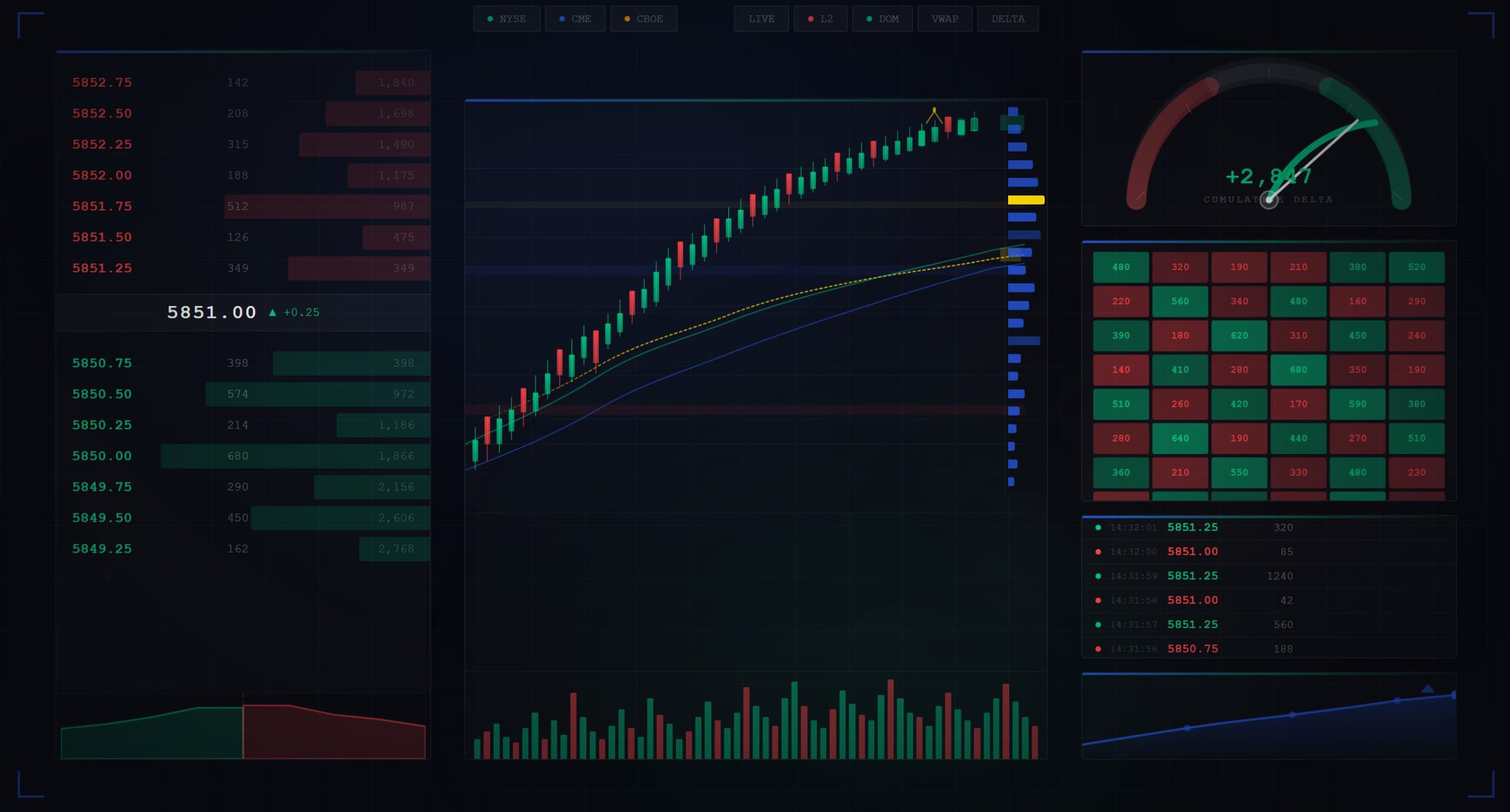
At ICunity, traders are encouraged to go beyond basic indicators and understand how professional market participants operate. Institutional traders—such as banks, hedge funds, and large financial firms—use advanced tools to analyze markets, manage risk, and execute trades efficiently.
Are you ready to transform your financial future?
Sign Up TodayNo credit card required • Free demo account • Instant activation
The good news? Many of these tools, or simplified versions of them, are now accessible to retail traders.
What Are Institutional Trading Tools?
Institutional tools are platforms, data sources, and technologies used by large financial players to:
- Analyze market conditions
- Track liquidity and order flow
- Manage large positions
- Execute trades with precision
While retail traders may not have access to the exact same infrastructure, they can still use similar tools to improve their trading decisions.
1. Advanced Charting Platforms
Institutional traders rely on high-quality charting tools for analysis.
Retail traders can use platforms like TradingView to access:
- Professional-grade charts
- Custom indicators
- Multi-timeframe analysis
- Community insights
These platforms provide a strong foundation for technical analysis.
2. Order Flow and Volume Analysis
Institutions closely monitor order flow—the flow of buy and sell orders in the market.
Retail-accessible tools include:
- Volume indicators
- Footprint charts
- Depth of Market (DOM)
These tools help traders understand where large orders may be entering or exiting the market.
3. Economic Calendars and News Feeds
Institutional traders stay updated with real-time economic data.
Retail traders can track:
- Interest rate decisions
- Employment reports
- Inflation data
For example, announcements from the Federal Reserve often create major volatility in Forex markets.
Using an economic calendar helps traders prepare for these events.
4. Algorithmic and Automated Trading Tools
Institutions often use algorithms to execute trades.
Retail traders can access similar features through platforms like MetaTrader 5, which allows:
- Automated trading strategies (Expert Advisors)
- Backtesting systems
- Custom scripts
Automation can reduce emotional decision-making and improve consistency.
5. Risk Management Tools
Professional traders focus heavily on risk control.
Retail traders can apply similar tools:
- Position size calculators
- Stop-loss and take-profit systems
- Risk-to-reward analysis
These tools help ensure that no single trade significantly damages the account.
6. Sentiment Analysis Tools
Institutions track how the market feels about certain assets.
Retail traders can access:
- Retail sentiment indicators
- Commitment of Traders (COT) reports
- Market positioning data
These tools provide insight into whether the market is overly bullish or bearish.
7. Liquidity and Market Structure Tools
Institutional traders focus on liquidity zones—areas where large orders are placed.
Retail traders can study:
- Support and resistance levels
- Breakout zones
- Market structure (higher highs, lower lows)
Understanding liquidity helps traders align with larger market movements.
8. Data and Analytics Platforms
Institutions use data-driven decision-making.
Retail traders can access simplified analytics through platforms like Bloomberg L.P. (limited access) or alternative tools that provide:
- Market news
- Financial data
- Economic insights
This helps traders stay informed and make better decisions.
Bridging the Gap Between Retail and Institutional Trading
The gap between institutional and retail trading has narrowed significantly.
Today, retail traders can:
- Access real-time data
- Use advanced charting tools
- Automate strategies
- Analyze market sentiment
However, the key difference is not just tools—it’s discipline, capital, and experience.
Common Misconception
Many beginners believe that using institutional tools guarantees success.
The reality is:
- Tools improve decision-making
- But they don’t replace strategy or discipline
Even with the best tools, poor risk management can lead to losses.
Final Thoughts
At ICunity, we believe that understanding institutional tools can give retail traders a valuable edge. While you may not have the same resources as large financial institutions, you can still adopt their mindset and approach.
Focus on:
- Data-driven decisions
- Risk management
- Consistency
Institutional tools are powerful—but success comes from how you use them.