

Smart Money Concepts Explained for Beginners
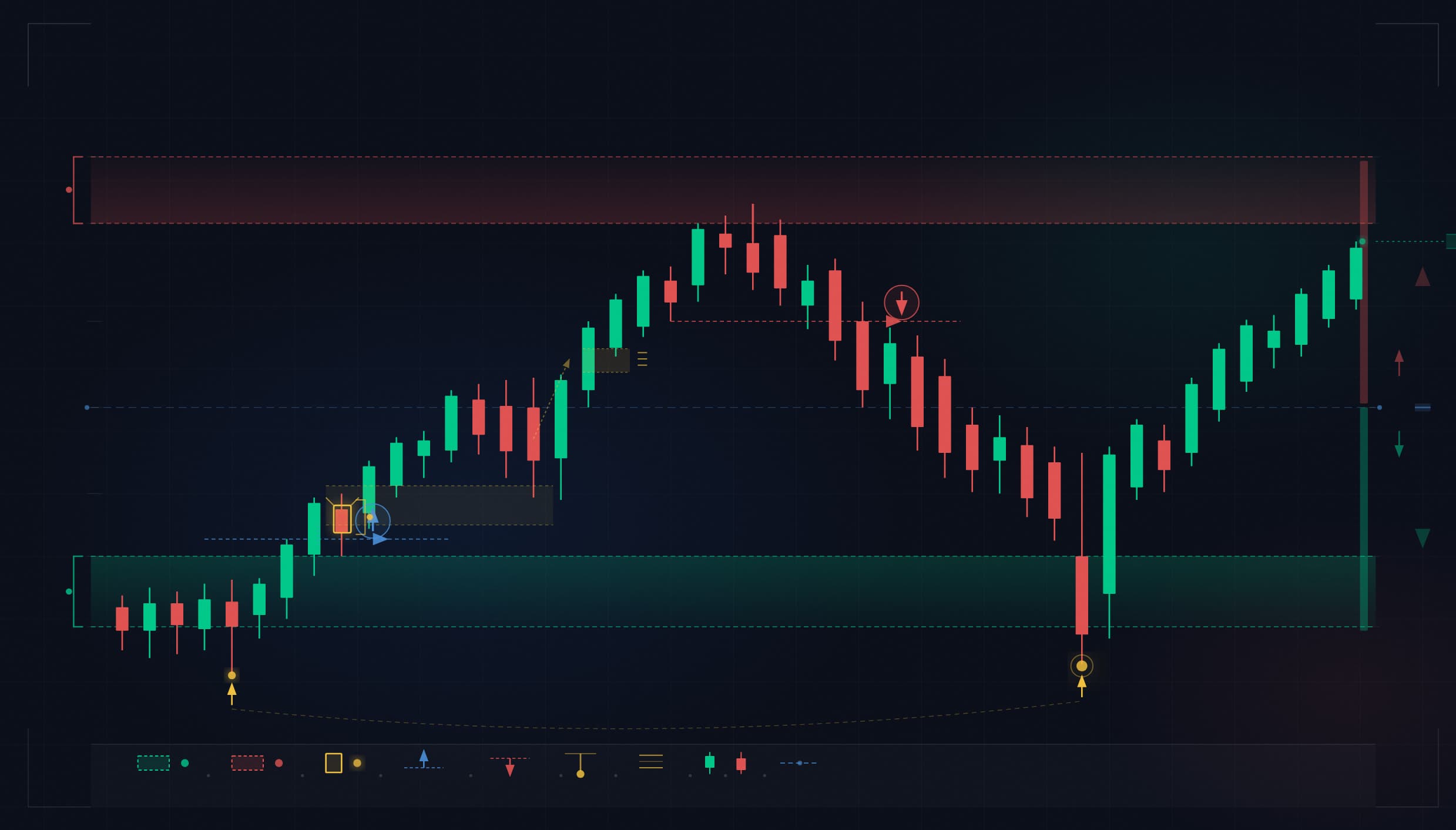
At ICunity, one of the fastest-growing topics in modern trading education is Smart Money Concepts (SMC). The approach has gained popularity among retail traders who want to better understand how large financial institutions move the market.
Are you ready to transform your financial future?
Sign Up TodayNo credit card required • Free demo account • Instant activation
Rather than relying only on traditional indicators, Smart Money Concepts focus on market structure, liquidity, and institutional behavior.
What Are Smart Money Concepts?
Smart Money Concepts refer to trading methods based on the idea that large institutions—such as banks, hedge funds, and financial firms—leave clues in the market through price movement.
These “smart money” players have:
- Large amounts of capital
- Advanced tools and data
- Significant influence on price movements
SMC traders attempt to follow the footprints of these institutional participants.
Why Has SMC Become Popular?
Retail traders are increasingly looking for:
- Cleaner chart analysis
- Better understanding of market behavior
- Alternatives to indicator-heavy trading
Social media and modern trading communities have also helped spread SMC strategies rapidly.
Core Smart Money Concepts
1. Market Structure
Market structure is the foundation of SMC.
Traders analyze:
- Higher highs and higher lows (uptrend)
- Lower highs and lower lows (downtrend)
Understanding structure helps identify market direction and potential reversals.
2. Liquidity
Liquidity refers to areas where many stop-losses or pending orders exist.
Institutions often target these areas because they provide enough volume for large trades.
Common liquidity zones include:
- Equal highs
- Equal lows
- Major support and resistance levels
3. Break of Structure (BOS)
A Break of Structure occurs when price breaks a key high or low.
This can signal:
- Trend continuation
- Potential shift in market direction
SMC traders use BOS to confirm momentum and trend changes.
4. Order Blocks
Order blocks are areas where institutions are believed to have placed large orders before strong market moves.
These zones often act as:
- Future support or resistance
- Potential entry areas for trades
Order blocks are one of the most discussed concepts in SMC trading.
5. Fair Value Gaps (FVG)
A Fair Value Gap is an imbalance in price caused by aggressive movement.
SMC traders believe markets often return to these gaps before continuing direction.
This concept is used to identify potential retracement zones.
How Smart Money Concepts Differ from Traditional Trading
Traditional trading often relies heavily on indicators like:
- RSI
- MACD
- Moving averages
SMC focuses more on:
- Raw price action
- Institutional behavior
- Liquidity movement
Many traders prefer SMC because it offers a deeper understanding of why price moves.
The Role of News and Institutions
Large institutions react strongly to economic events.
For example, decisions from the Federal Reserve can create liquidity spikes and major structural shifts in Forex markets.
SMC traders pay close attention to these events because institutional activity often increases during periods of high volatility.
Benefits of Smart Money Concepts
- Cleaner chart analysis
- Better understanding of market behavior
- Focus on institutional logic
- Improved market structure awareness
Many traders feel SMC helps them see the market more clearly.
Risks and Challenges
Despite its popularity, SMC is not a guaranteed path to profits.
Common beginner mistakes include:
- Overcomplicating charts
- Misidentifying liquidity zones
- Ignoring risk management
- Blindly following online influencers
Like any strategy, SMC requires practice and discipline.
Is Smart Money Concepts Good for Beginners?
Yes—but beginners should keep it simple.
Start by learning:
- Market structure
- Support and resistance
- Basic liquidity concepts
Avoid trying to master every advanced concept immediately.
Final Thoughts
At ICunity, we believe Smart Money Concepts can help traders better understand how markets truly operate. By focusing on liquidity, structure, and institutional behavior, traders can develop a more strategic view of price action.
However, SMC is still just a tool—not a shortcut. Long-term success still depends on:
- Risk management
- Discipline
- Consistency
- Continuous learning
Understanding how smart money moves can improve your trading—but mastering yourself remains the most important skill of all.