

Trading Psychology: Why Most Traders Lose Money
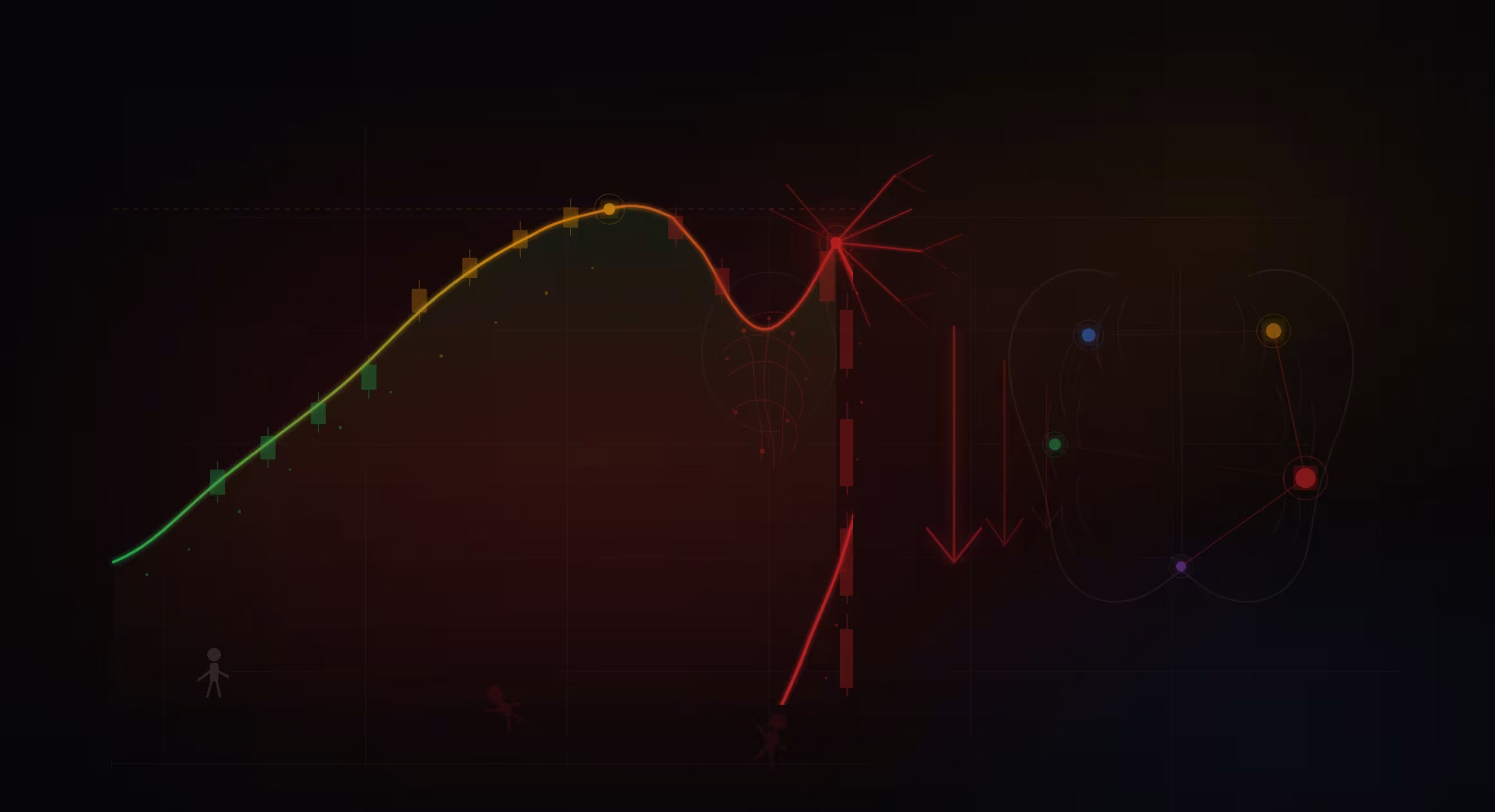
At ICunity, many new traders spend countless hours learning technical indicators, chart patterns, and trading strategies. While these skills are important, they often overlook one of the biggest factors behind trading success or failure: psychology. In reality, many traders do not lose money because they lack knowledge—they lose money because they struggle to control their emotions and behavior.
Are you ready to transform your financial future?
Sign Up TodayNo credit card required • Free demo account • Instant activation
Understanding trading psychology can help traders avoid common mistakes and develop the discipline needed for long-term success.
What Is Trading Psychology?
Trading psychology refers to the emotions, thoughts, and mental habits that influence trading decisions.
Every trader experiences emotions such as:
- Fear
- Greed
- Hope
- Frustration
- Excitement
- Anxiety
The challenge is not eliminating these emotions but preventing them from controlling trading decisions.
Why Psychology Matters More Than Strategy
Many traders believe finding the perfect strategy will solve all their problems.
However, even a profitable strategy can fail when a trader:
- Ignores risk management
- Exits trades too early
- Holds losing trades too long
- Trades emotionally
Two traders can use the same strategy and achieve completely different results based on their psychological discipline.
Fear Causes Missed Opportunities
Fear is one of the most common emotions in trading.
It often appears after:
- A series of losses
- High market volatility
- Unexpected market events
Fear can cause traders to:
- Avoid valid setups
- Close winning trades prematurely
- Hesitate when opportunities appear
As a result, traders may miss profitable opportunities despite having a solid strategy.
Greed Leads to Poor Decisions
Greed often appears during winning streaks.
Common signs of greed include:
- Increasing position sizes excessively
- Ignoring trading rules
- Chasing market moves
- Refusing to take profits
Greed creates unrealistic expectations and encourages unnecessary risk-taking.
The Desire to Be Right
Many traders become emotionally attached to their opinions.
Instead of following the market, they try to prove their predictions are correct.
This can lead to:
- Holding losing trades
- Ignoring new information
- Refusing to accept mistakes
Professional traders focus on managing risk, not proving they are right.
Revenge Trading Destroys Accounts
After a losing trade, some traders immediately try to recover their losses.
This behavior is known as revenge trading.
It often results in:
- Emotional decision-making
- Overtrading
- Larger losses
Successful traders understand that losses are a normal part of the business and do not require immediate recovery.
Overconfidence After Success
Winning trades can create confidence, but too much confidence can be dangerous.
Overconfident traders may:
- Ignore risk management
- Increase leverage excessively
- Take low-quality setups
A few successful trades do not guarantee future success.
Lack of Patience Hurts Performance
Many traders struggle with waiting.
They feel pressured to:
- Be in the market constantly
- Take every opportunity
- Generate profits quickly
Professional traders often spend more time waiting for quality setups than actively trading.
Patience is a competitive advantage in financial markets.
Poor Risk Management Increases Emotional Pressure
Risking too much money on a single trade creates emotional stress.
When traders risk more than they can comfortably afford to lose, they are more likely to:
- Panic during market fluctuations
- Move stop-loss orders
- Make irrational decisions
Proper position sizing helps maintain emotional control.
How Professional Traders Think Differently
Professional traders understand that losses are unavoidable.
Instead of focusing on individual trades, they focus on:
- Long-term performance
- Consistent execution
- Risk management
- Following their trading plan
Their goal is not perfection but consistency.
The Importance of a Trading Plan
A trading plan helps remove emotion from decision-making.
A solid plan should define:
- Entry criteria
- Exit criteria
- Risk management rules
- Position sizing guidelines
Following a plan creates structure and reduces impulsive behavior.
Keeping a Trading Journal
Many successful traders maintain a journal to track their progress.
A journal can include:
- Trade setups
- Entry and exit reasons
- Emotional state
- Lessons learned
Reviewing past trades often reveals recurring psychological patterns that need improvement.
Focus on Process, Not Profits
One of the biggest psychological mistakes traders make is becoming obsessed with profits.
Professional traders focus on:
- Executing their strategy correctly
- Following risk management rules
- Staying disciplined
When the process improves, results often improve as well.
Developing Emotional Discipline
Emotional discipline is a skill that develops over time.
Ways to improve include:
- Practicing on demo accounts
- Reducing risk per trade
- Following a written trading plan
- Taking breaks after emotional trades
- Reviewing performance regularly
Like technical analysis, psychological discipline requires consistent practice.
Final Thoughts
At ICunity, we believe that trading psychology is often the missing piece that separates successful traders from struggling ones. While strategies and indicators are important, emotions such as fear, greed, impatience, and overconfidence frequently cause traders to abandon their plans and make costly mistakes.
The traders who achieve long-term success are not necessarily those with the most complex strategies. They are the ones who develop discipline, manage risk effectively, and maintain emotional control regardless of market conditions. Master your psychology, and you will be far better prepared to navigate the challenges of trading.