

What Is Risk Management in Trading?
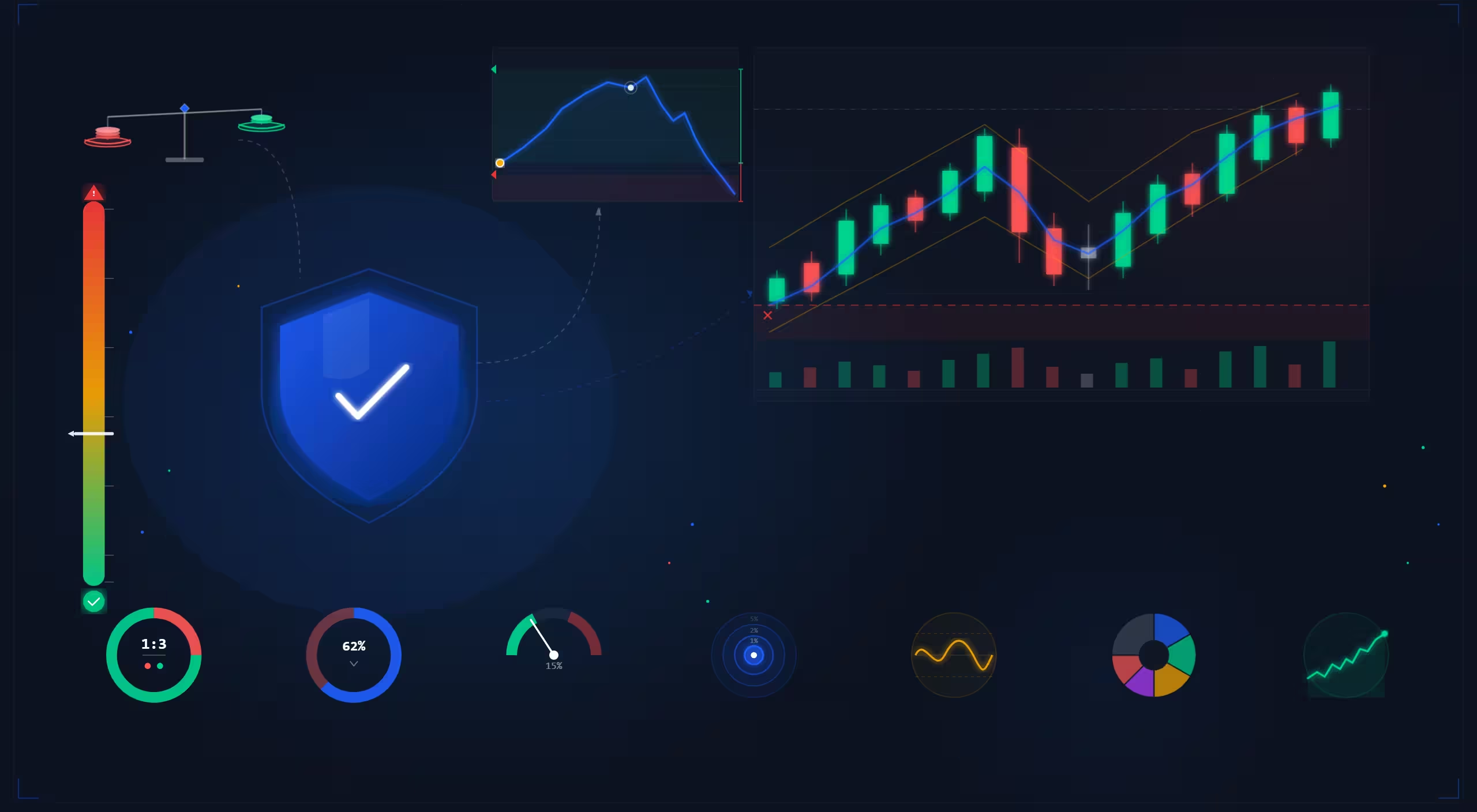
At ICunity, we believe that risk management is the foundation of successful trading. While many traders spend most of their time searching for profitable strategies and indicators, experienced traders understand that protecting capital is what allows them to stay in the market long enough to achieve consistent results.
Are you ready to transform your financial future?
Sign Up TodayNo credit card required • Free demo account • Instant activation
No trading strategy wins all the time. Risk management is what helps traders survive losing periods, control emotions, and build a sustainable approach to trading.
What Is Risk Management?
Risk management is the process of controlling how much money you are willing to lose on any single trade and throughout your overall trading activity.
It involves creating rules that help protect your trading capital from unnecessary losses.
Good risk management focuses on:
- Preserving capital
- Limiting losses
- Maintaining consistency
- Reducing emotional pressure
- Supporting long-term growth
The goal is not to avoid losses completely but to ensure that losses remain manageable.
Why Is Risk Management Important?
Every trader experiences losing trades.
Without proper risk management, a few bad decisions can severely damage a trading account.
Effective risk management helps traders:
- Stay in the market during difficult periods
- Prevent large account drawdowns
- Trade with greater confidence
- Reduce emotional decision-making
- Improve long-term consistency
Many professional traders believe that managing risk is more important than finding the perfect entry.
The 1% to 2% Rule
One of the most common risk management guidelines is the 1% to 2% rule.
This means risking only a small percentage of your trading account on a single trade.
For example:
- A trader with a $5,000 account risking 1% would risk a maximum of $50 per trade.
- Risking 2% would mean a maximum loss of $100 per trade.
This approach helps prevent a single losing trade from causing significant damage.
What Is a Stop-Loss?
A stop-loss is an order designed to automatically close a trade if the market moves against you by a predetermined amount.
It serves as a protective tool.
Benefits of using stop-loss orders include:
- Limiting losses
- Removing emotional decision-making
- Protecting trading capital
- Supporting discipline
Professional traders determine their stop-loss levels before entering a trade.
Understanding Position Sizing
Position sizing refers to deciding how large your trade should be based on your account size and risk tolerance.
Proper position sizing ensures that:
- Risk remains consistent
- Losses stay manageable
- Emotional pressure is reduced
Trading larger positions than your account can comfortably support often leads to poor decisions.
What Is Risk-to-Reward Ratio?
Risk-to-reward ratio compares the amount you are risking to the amount you hope to gain.
Examples include:
- Risking $100 to potentially earn $200 = 1:2 ratio
- Risking $100 to potentially earn $300 = 1:3 ratio
A favorable risk-to-reward ratio allows traders to remain profitable even if they do not win every trade.
Why Capital Preservation Matters
Your trading capital is your most valuable asset.
Without capital:
- You cannot take future opportunities.
- You cannot apply your strategy.
- You cannot recover from mistakes.
Protecting capital should always take priority over chasing profits.
Many successful traders focus first on avoiding large losses rather than maximizing gains.
Avoid Overleveraging
Leverage allows traders to control larger positions using a smaller amount of capital.
While leverage can increase profits, it can also magnify losses.
Overleveraging may lead to:
- Rapid account losses
- Increased emotional stress
- Poor decision-making
- Greater exposure to market volatility
Using leverage responsibly is an important part of risk management.
Set Daily and Weekly Limits
Professional traders often establish limits to control risk.
Examples include:
- Maximum daily loss limits
- Maximum weekly drawdown limits
- Limits on the number of trades taken
These rules help prevent emotional reactions and revenge trading.
Diversification and Exposure
Risk management also involves understanding overall market exposure.
For example, opening multiple positions that are heavily correlated can increase risk unexpectedly.
Traders should consider:
- Whether trades are related
- Total account exposure
- The impact of major news events
Managing exposure helps avoid concentration risk.
The Importance of a Trading Plan
A trading plan provides structure and consistency.
It should include:
- Entry criteria
- Exit criteria
- Risk per trade
- Position sizing rules
- Maximum loss limits
Following a written plan helps traders remain disciplined during both winning and losing periods.
Common Risk Management Mistakes
Many traders struggle because they:
- Risk too much on a single trade
- Trade without stop-loss orders
- Increase position sizes after losses
- Ignore risk-to-reward ratios
- Overleverage their accounts
- Trade emotionally
Avoiding these mistakes can significantly improve long-term performance.
Risk Management and Psychology
Good risk management reduces emotional stress.
When traders know exactly how much they can lose, they are less likely to:
- Panic during market fluctuations
- Make impulsive decisions
- Move stop-loss orders emotionally
- Chase losses
Confidence often comes from knowing that risk is controlled.
Consistency Over Perfection
Many beginners focus on trying to win every trade.
Professional traders understand that this is unrealistic.
Instead, they focus on:
- Following their process
- Managing risk consistently
- Protecting capital
- Thinking long term
A trader can still be successful despite experiencing regular losses, provided those losses remain controlled.
Final Thoughts
At ICunity, we believe that risk management is the true backbone of trading success. Strategies, indicators, and market analysis all have value, but without proper risk control, even the best trading systems can fail.
Learning to manage risk means accepting that losses are part of the journey while ensuring they never become catastrophic. By using stop-loss orders, controlling position sizes, maintaining realistic expectations, and following a disciplined trading plan, traders can build a stronger foundation for long-term growth and consistency.
In trading, it’s not the traders who avoid losses entirely that succeed—it’s the ones who know how to manage them wisely.