

Why Unified Trading Environments Are the Future
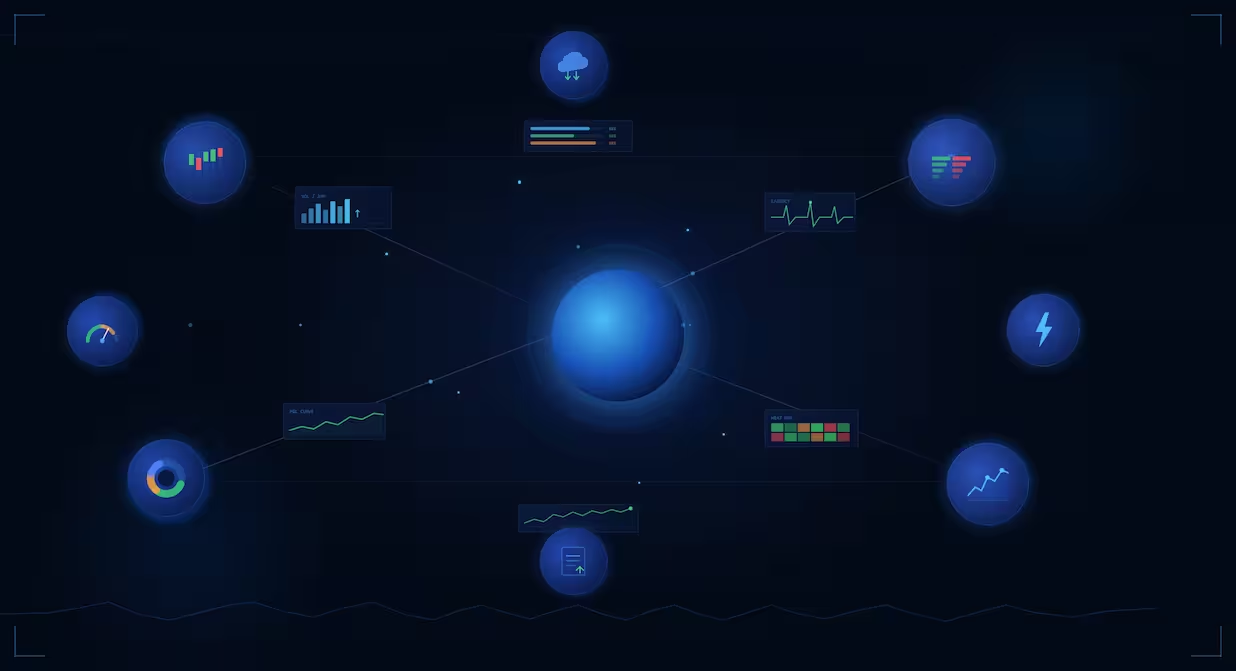
At ICunity, we believe the future of trading is not just about better strategies or faster execution—it’s about creating a seamless trading experience. As financial markets become more complex and technology continues to evolve, traders increasingly need platforms that bring everything together in one place. This is where unified trading environments are changing the industry.
Are you ready to transform your financial future?
Sign Up TodayNo credit card required • Free demo account • Instant activation
Rather than relying on multiple disconnected tools, modern traders are looking for ecosystems that combine analysis, execution, education, and risk management into a single, integrated experience.
What Is a Unified Trading Environment?
A unified trading environment is a platform or ecosystem that combines various trading tools and services into one interface.
These may include:
- Charting and technical analysis
- Market news and economic calendars
- Trade execution
- Portfolio management
- Educational resources
- Trading journals
- Risk management tools
- Community features
The goal is to eliminate unnecessary complexity and create a more efficient workflow.
The Problem With Fragmented Trading
Many traders use several different applications during their daily routine.
For example:
- One platform for charts
- Another for market news
- A separate broker for execution
- Different software for journaling and analytics
This fragmented approach can lead to:
- Reduced efficiency
- Information overload
- Missed opportunities
- Increased stress
- Higher chances of mistakes
Managing multiple tools often consumes time that could be spent focusing on trading decisions.
Efficiency Matters More Than Ever
Financial markets move quickly.
Having all important information available in one place allows traders to:
- Make decisions faster
- Monitor positions more effectively
- Reduce distractions
- Improve workflow efficiency
The easier it is to access information, the easier it becomes to react appropriately to changing market conditions.
Better Decision-Making Through Integration
Unified environments allow traders to connect different types of information.
For example:
- Economic events can be viewed directly alongside charts.
- Risk metrics can be monitored while placing trades.
- Educational materials can be accessed without leaving the platform.
This integration creates a more complete view of the market.
Improved Risk Management
Risk management becomes easier when important information is centralized.
Unified platforms can provide:
- Position monitoring
- Account analytics
- Margin information
- Stop-loss management
- Performance tracking
Having these tools in one environment helps traders maintain discipline and avoid unnecessary risk.
A Better Experience for Beginners
New traders often feel overwhelmed by the number of tools available.
A unified environment can simplify the learning process by providing:
- Educational content
- User-friendly interfaces
- Integrated charting tools
- Market analysis resources
Reducing complexity can help beginners focus on building skills rather than managing multiple applications.
Supporting Experienced Traders
Experienced traders also benefit from integrated ecosystems.
Advanced users often require:
- Multiple chart layouts
- Real-time market data
- Fast execution
- Performance analytics
- Customizable workflows
Unified environments can streamline these processes and improve productivity.
Mobile and Cross-Device Access
Modern traders expect flexibility.
Unified platforms increasingly offer:
- Desktop applications
- Web-based access
- Mobile trading capabilities
- Cloud synchronization
This allows traders to monitor markets and manage positions from almost anywhere.
The Rise of Artificial Intelligence
Artificial intelligence is becoming an increasingly important part of trading technology.
Future unified environments may offer:
- Personalized market insights
- Automated analysis
- Smart alerts
- Enhanced risk monitoring
- Customized educational recommendations
AI has the potential to make trading environments even more intelligent and efficient.
Collaboration and Community Features
Modern trading platforms are beginning to incorporate social and community elements.
Integrated communities can allow traders to:
- Share ideas
- Discuss market developments
- Learn from experienced participants
- Access educational content
Combining community features with trading tools creates a more engaging experience.
Data Is Becoming More Important
Today’s traders rely on enormous amounts of information.
Unified environments help organize:
- Price data
- Economic news
- Performance statistics
- Trading history
- Market analysis
Centralized data improves accessibility and reduces the need to switch between applications.
The Future Is About Ecosystems
The financial industry is moving toward complete ecosystems rather than standalone products.
The next generation of trading platforms will likely focus on:
- Integration
- Simplicity
- Personalization
- Automation
- Accessibility
Traders increasingly want solutions that support every stage of the trading process.
Why Unified Environments Matter
A unified trading environment can help traders:
- Save time
- Reduce complexity
- Improve organization
- Make more informed decisions
- Enhance overall efficiency
Technology should simplify trading, not make it more complicated.
Final Thoughts
At ICunity, we believe unified trading environments represent the next major evolution in financial technology. As markets become more connected and data-driven, traders need platforms that bring together analysis, execution, education, and risk management into a single, seamless experience.
The future of trading is likely to be defined by integrated ecosystems that make information more accessible, improve efficiency, and support better decision-making. While no platform can guarantee trading success, unified environments can provide traders with the tools and structure needed to navigate increasingly complex financial markets with greater confidence and convenience.