

Economic Calendars Explained for Traders
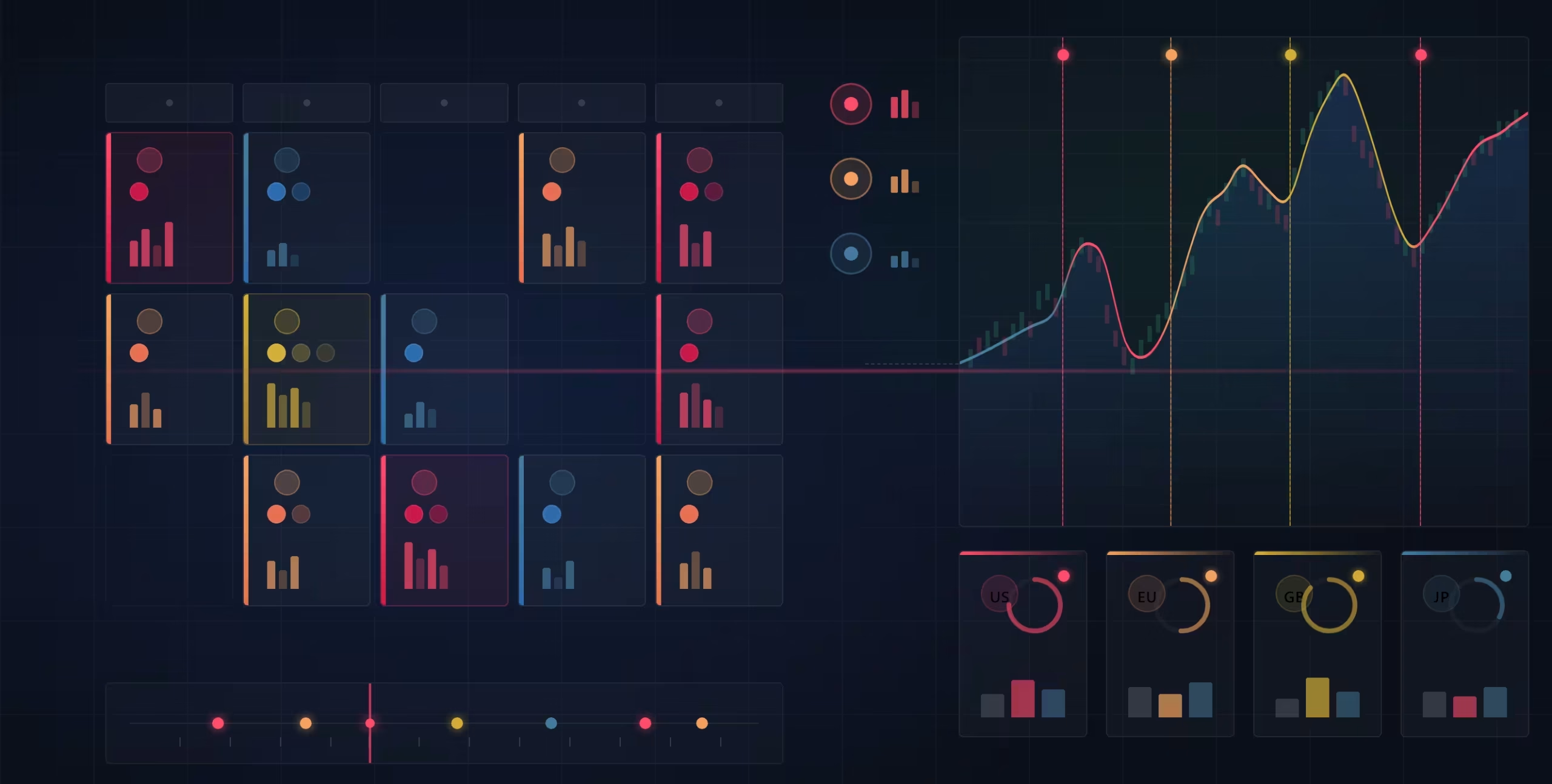
At ICunity, we believe that understanding economic events is just as important as learning technical analysis. Many traders focus heavily on charts and indicators while overlooking one of the biggest drivers of market movement: economic news. An economic calendar helps traders prepare for important events that can influence currencies, stocks, commodities, and other financial markets.
Are you ready to transform your financial future?
Sign Up TodayNo credit card required • Free demo account • Instant activation
Learning how to use an economic calendar effectively can improve decision-making, reduce surprises, and help traders manage risk more confidently.
What Is an Economic Calendar?
An economic calendar is a schedule of upcoming economic events, reports, and announcements that have the potential to affect financial markets.
It provides traders with information such as:
- The date and time of the event
- The country involved
- The type of economic report
- Forecasted figures
- Previous results
- The potential market impact
Economic calendars help traders know when significant market volatility may occur.
Why Economic Calendars Matter
Financial markets react to new information.
When important economic data is released, traders and institutions quickly adjust their expectations, which can lead to substantial price movements.
Using an economic calendar allows traders to:
- Prepare for volatility
- Avoid unexpected market shocks
- Plan entries and exits more effectively
- Adjust risk exposure
- Stay informed about market conditions
Preparation often leads to better decision-making.
What Information Does an Economic Calendar Show?
Most economic calendars display several key pieces of information.
Event Name
This identifies the economic report or announcement being released.
Examples include:
- Interest Rate Decisions
- Inflation Reports
- Employment Data
- GDP Reports
- Retail Sales Figures
Understanding the nature of each event helps traders anticipate its potential impact.
Date and Time
Economic releases occur at scheduled times.
Knowing exactly when announcements are expected allows traders to plan accordingly and avoid being caught off guard.
Country or Currency
Economic calendars indicate which country the event relates to.
For Forex traders, this is especially important because it highlights which currencies may be affected.
For example:
- U.S. events may influence the U.S. dollar.
- Eurozone events may affect the euro.
- U.K. reports may impact the British pound.
Forecast
The forecast represents economists’ expectations for the upcoming release.
Markets often react not only to the actual result but also to how it compares with these expectations.
Previous Reading
This shows the outcome from the previous reporting period.
Comparing previous results with forecasts and actual figures provides additional context.
Impact Level
Many economic calendars classify events based on their expected market impact.
Common categories include:
- Low impact
- Medium impact
- High impact
High-impact events generally attract the most attention from traders.
Major Economic Events Traders Monitor
Some reports tend to move markets more than others.
Common examples include:
Interest Rate Decisions
Central banks regularly announce whether interest rates will remain unchanged, increase, or decrease.
Interest rate decisions can significantly influence currency values and market sentiment.
Inflation Reports
Inflation measures changes in the prices of goods and services.
These reports often shape expectations regarding future monetary policy.
Employment Data
Employment reports provide insights into labor market strength.
Strong or weak employment figures can affect economic outlooks and currency performance.
Gross Domestic Product (GDP)
GDP measures overall economic activity.
It is commonly viewed as an indicator of economic health.
Central Bank Speeches
Comments from policymakers can influence expectations and create volatility even without formal policy changes.
How Traders Use Economic Calendars
Different traders use economic calendars in different ways.
Some traders:
- Avoid opening positions before major announcements.
- Reduce position sizes during volatile periods.
- Wait for markets to settle after a release.
- Actively trade around economic events.
The approach depends on individual strategies and risk tolerance.
Preparing Before Major Events
Preparation is essential when high-impact events are approaching.
Traders should consider:
- Whether they have open positions that may be affected.
- Whether stop-loss levels remain appropriate.
- If reducing exposure is necessary.
- Whether new trades should be delayed until volatility decreases.
Planning ahead can help reduce emotional decision-making.
Economic Calendars and Risk Management
Economic calendars are valuable risk management tools.
Unexpected volatility can increase:
- Slippage
- Spread widening
- Rapid price fluctuations
- Emotional pressure
Being aware of upcoming events allows traders to adapt their strategies and protect capital more effectively.
Common Mistakes Beginners Make
Many new traders underestimate the importance of economic calendars.
Common mistakes include:
- Ignoring major news releases
- Trading without checking scheduled events
- Overleveraging before announcements
- Assuming forecasts guarantee outcomes
- Reacting emotionally to unexpected results
Awareness and preparation can help avoid these pitfalls.
Combining Fundamental and Technical Analysis
Economic calendars do not replace chart analysis.
Instead, they complement it.
Many successful traders combine:
- Technical analysis for timing and setups
- Fundamental awareness through economic calendars
- Risk management principles
This balanced approach provides a broader perspective on market conditions.
Focus on Preparation, Not Prediction
No one can predict every market reaction perfectly.
Economic data may produce outcomes that surprise traders and analysts alike.
Rather than attempting to forecast every move, experienced traders focus on:
- Understanding potential risks
- Preparing for multiple scenarios
- Managing exposure appropriately
- Remaining disciplined
Preparation often proves more valuable than prediction.
Final Thoughts
At ICunity, we believe economic calendars are essential tools for every trader, regardless of experience level. They provide valuable insight into upcoming events that may influence market behavior and help traders prepare for periods of heightened volatility.
By learning how to interpret economic calendars, understanding the importance of major economic releases, and integrating this information into a structured trading plan, traders can make more informed decisions and strengthen their overall risk management approach. Markets will always react to new information, but traders who stay informed and prepared are often better equipped to navigate those changes with confidence and discipline.