

How to Use Moving Averages in Forex Trading
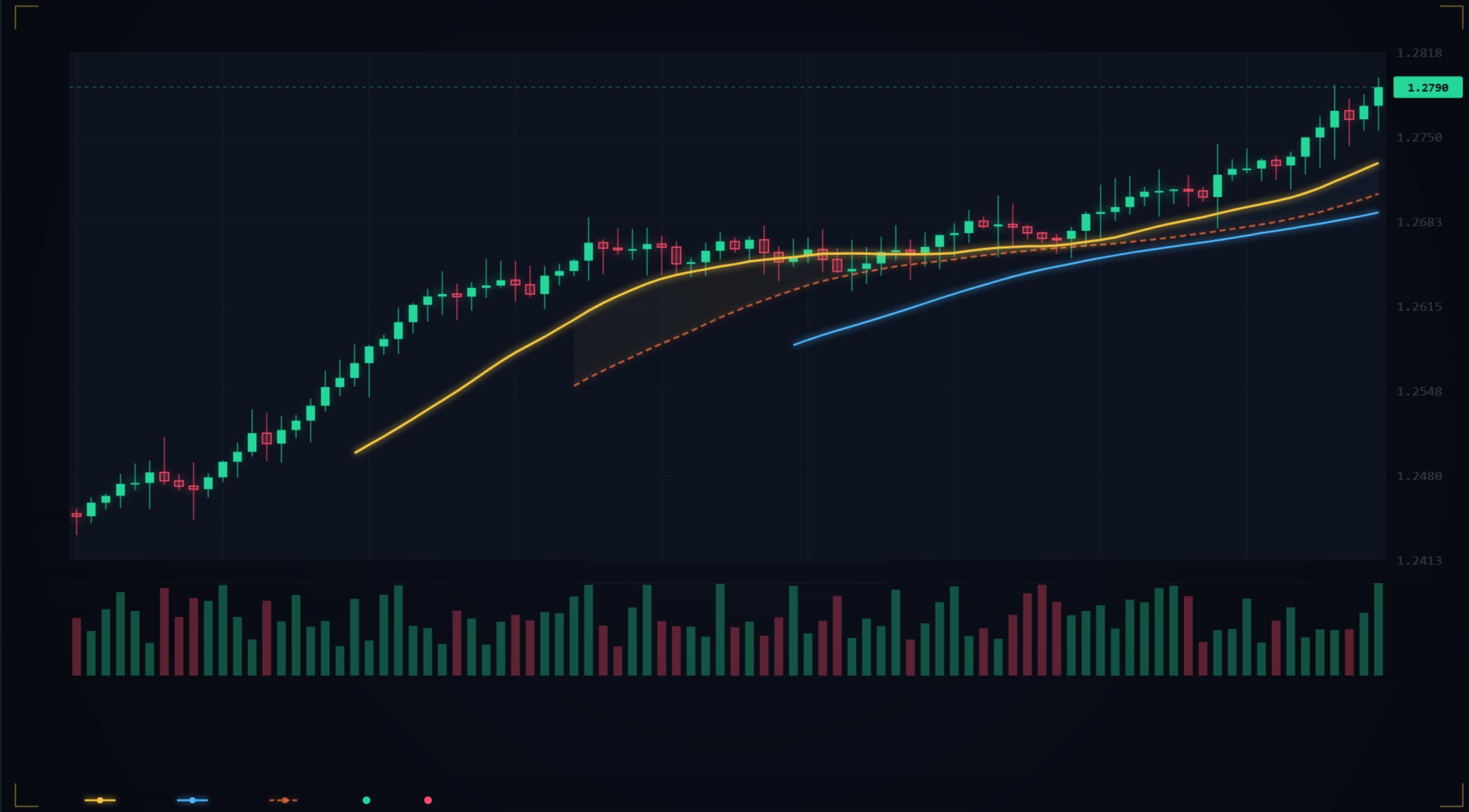
At ICunity, moving averages are considered one of the most useful tools for beginner and professional traders alike. They help simplify charts, identify trends, and improve trade timing without adding unnecessary complexity.
Are you ready to transform your financial future?
Sign Up TodayNo credit card required • Free demo account • Instant activation
While moving averages are simple indicators, they can become extremely powerful when combined with proper risk management and market structure analysis.
What Is a Moving Average?
A moving average (MA) is an indicator that calculates the average price of a currency pair over a specific period of time.
It helps traders:
- Identify trends
- Smooth out market noise
- Spot potential entry and exit points
Instead of reacting to every small price movement, moving averages help traders focus on the bigger picture.
Types of Moving Averages
1. Simple Moving Average (SMA)
The SMA calculates the average closing price over a set period.
Example:
- 50 SMA
- 200 SMA
It reacts more slowly to price changes.
2. Exponential Moving Average (EMA)
The EMA gives more weight to recent prices.
This makes it:
- Faster
- More responsive to market movement
Many Forex traders prefer EMAs for short-term trading.
Why Traders Use Moving Averages
Moving averages help traders:
- Identify market direction
- Confirm trends
- Find dynamic support and resistance
- Reduce emotional trading
Platforms like TradingView and MetaTrader 5 make it easy to apply moving averages to charts.
How to Use Moving Averages Step by Step
Step 1: Identify the Trend
One of the simplest uses of moving averages is trend identification.
Uptrend:
- Price above moving average
- Moving average sloping upward
Downtrend:
- Price below moving average
- Moving average sloping downward
This helps traders avoid trading against momentum.
Step 2: Use Moving Average Crossovers
A popular strategy is the moving average crossover.
Common Setup:
- 50 EMA
- 200 EMA
Bullish Signal:
50 EMA crosses above 200 EMA.
Bearish Signal:
50 EMA crosses below 200 EMA.
This strategy is often used to identify major trend shifts.
Step 3: Use Moving Averages as Dynamic Support and Resistance
Price often reacts around moving averages during trends.
Example:
In an uptrend:
- Price pulls back to the 50 EMA
- Buyers step in
- Trend continues upward
Many traders use this pullback approach for entries.
Step 4: Combine with Price Action
Moving averages work best when combined with:
- Candlestick patterns
- Support and resistance
- Market structure
Example:
- Price touches 50 EMA
- Bullish engulfing candle forms
- Trader enters buy trade
This improves trade confirmation.
Best Moving Average Settings for Beginners
Popular Settings:
- 20 EMA → short-term trend
- 50 EMA → medium-term trend
- 200 EMA → long-term trend
These settings are widely used across Forex markets.
Best Timeframes for Moving Averages
Moving averages can work on all timeframes, but beginners often prefer:
- 1-Hour chart (H1)
- 4-Hour chart (H4)
- Daily chart (D1)
Higher timeframes usually produce more reliable signals.
Common Moving Average Strategies
1. Trend Following
Trade only in the direction of the moving average trend.
2. Pullback Strategy
Wait for price to retrace toward the moving average before entering.
3. Breakout Confirmation
Use moving averages to confirm breakout momentum.
Common Beginner Mistakes
1. Using Too Many Moving Averages
Too many lines create confusion.
2. Trading Every Crossover
Not all crossovers are reliable.
3. Ignoring Market Conditions
Moving averages perform poorly in sideways markets.
4. Relying Only on Indicators
Indicators should support analysis—not replace it.
The Role of News and Volatility
Major economic events can temporarily distort moving average signals.
For example, announcements from the Federal Reserve can create sharp price spikes that temporarily ignore technical indicators.
This is why traders combine technical analysis with market awareness.
Advantages of Moving Averages
- Easy to understand
- Great for identifying trends
- Useful for beginners
- Helps reduce market noise
Disadvantages of Moving Averages
- Lagging indicator (based on past data)
- False signals during sideways markets
- Not effective alone without context
No indicator is perfect.
Final Thoughts
At ICunity, moving averages are viewed as one of the best starting tools for beginner Forex traders. They simplify chart analysis and help traders focus on trend direction instead of random market movement.
However, successful trading does not come from indicators alone. The real key is combining moving averages with:
- Risk management
- Patience
- Discipline
- Market understanding
Keep your strategy simple, focus on consistency, and use moving averages as a guide—not a guarantee.