

Trading Indicators vs Price Action: What’s Better?
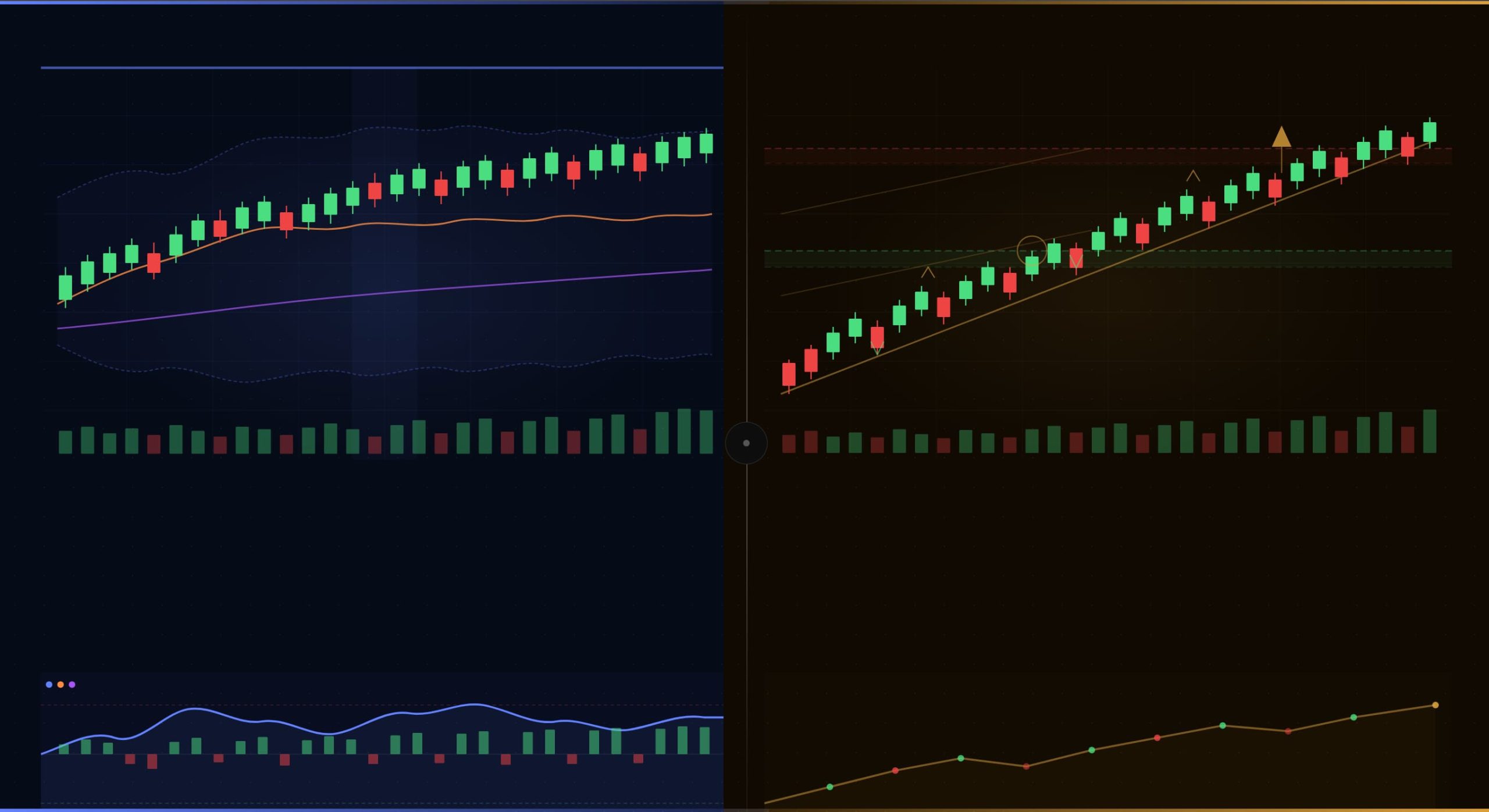
At ICunity, one of the most debated topics among traders is whether to use trading indicators or rely purely on price action. Beginners often feel confused when choosing between the two, while experienced traders usually develop a preference based on their style.
Are you ready to transform your financial future?
Sign Up TodayNo credit card required • Free demo account • Instant activation
The truth is simple: neither is universally “better.” The real question is which works best for you.
What Are Trading Indicators?
Trading indicators are mathematical calculations based on price, volume, or time. They are designed to help traders identify trends, momentum, and potential entry or exit points.
Common indicators include:
- Moving Averages
- RSI (Relative Strength Index)
- MACD (Moving Average Convergence Divergence)
- Bollinger Bands
Platforms like MetaTrader 5 offer built-in indicators that make analysis easier for beginners.
What Is Price Action Trading?
Price action trading focuses on raw price movement without relying heavily on indicators.
Instead of using formulas, traders analyze:
- Candlestick patterns
- Support and resistance levels
- Market structure (trends, breakouts)
Price action is often considered a more “pure” way of reading the market.
Key Differences
1. Simplicity vs Structure
- Price Action: Clean charts, fewer distractions
- Indicators: Structured signals and confirmations
Price action traders prefer simplicity, while indicator traders prefer guidance.
2. Lag vs Real-Time
- Indicators: Often lag behind price because they use past data
- Price Action: Based on real-time price movement
This is why many traders say price action gives earlier signals.
3. Learning Curve
- Indicators: Easier for beginners to understand initially
- Price Action: Takes more time to master
Indicators provide clear signals, while price action requires experience and interpretation.
4. Flexibility
- Price Action: Works across all markets and conditions
- Indicators: May perform better in specific conditions (trending or ranging)
Advantages of Trading Indicators
- Easy to use for beginners
- Helps confirm trade setups
- Reduces guesswork
- Useful for identifying trends and momentum
Indicators can act as a support system, especially when starting out.
Advantages of Price Action
- No lagging signals
- Cleaner charts
- Better understanding of market behavior
- More adaptable to changing conditions
Price action helps traders understand why the market is moving—not just what it is doing.
Which One Should You Choose?
It depends on your personality and trading style.
Choose indicators if:
- You prefer clear signals
- You are just starting out
- You want structured decision-making
Choose price action if:
- You prefer clean charts
- You want deeper market understanding
- You are willing to practice and gain experience
Can You Combine Both?
Yes—and many successful traders do.
A common approach is:
- Use price action to identify key levels and trends
- Use indicators for confirmation
This creates a balanced strategy that reduces false signals.
The Role of Market Awareness
Regardless of your method, external factors still matter. For example, decisions from the Federal Reserve can move markets sharply, affecting both indicator signals and price action setups.
No strategy works in isolation.
Common Mistake to Avoid
Many beginners overload their charts with too many indicators, leading to:
- Confusion
- Conflicting signals
- Poor decision-making
More tools do not mean better results. Simplicity often wins.
Final Thoughts
At ICunity, we believe the debate between indicators and price action misses the bigger point. Tools don’t make traders successful—discipline, risk management, and consistency do.
Indicators can guide you. Price action can sharpen your understanding. But neither will work without proper execution.
The best approach is to experiment, find what suits your style, and stay consistent. In trading, success doesn’t come from choosing the “perfect tool”—it comes from mastering the one you use.