

Trading vs Investing: What’s the Difference?
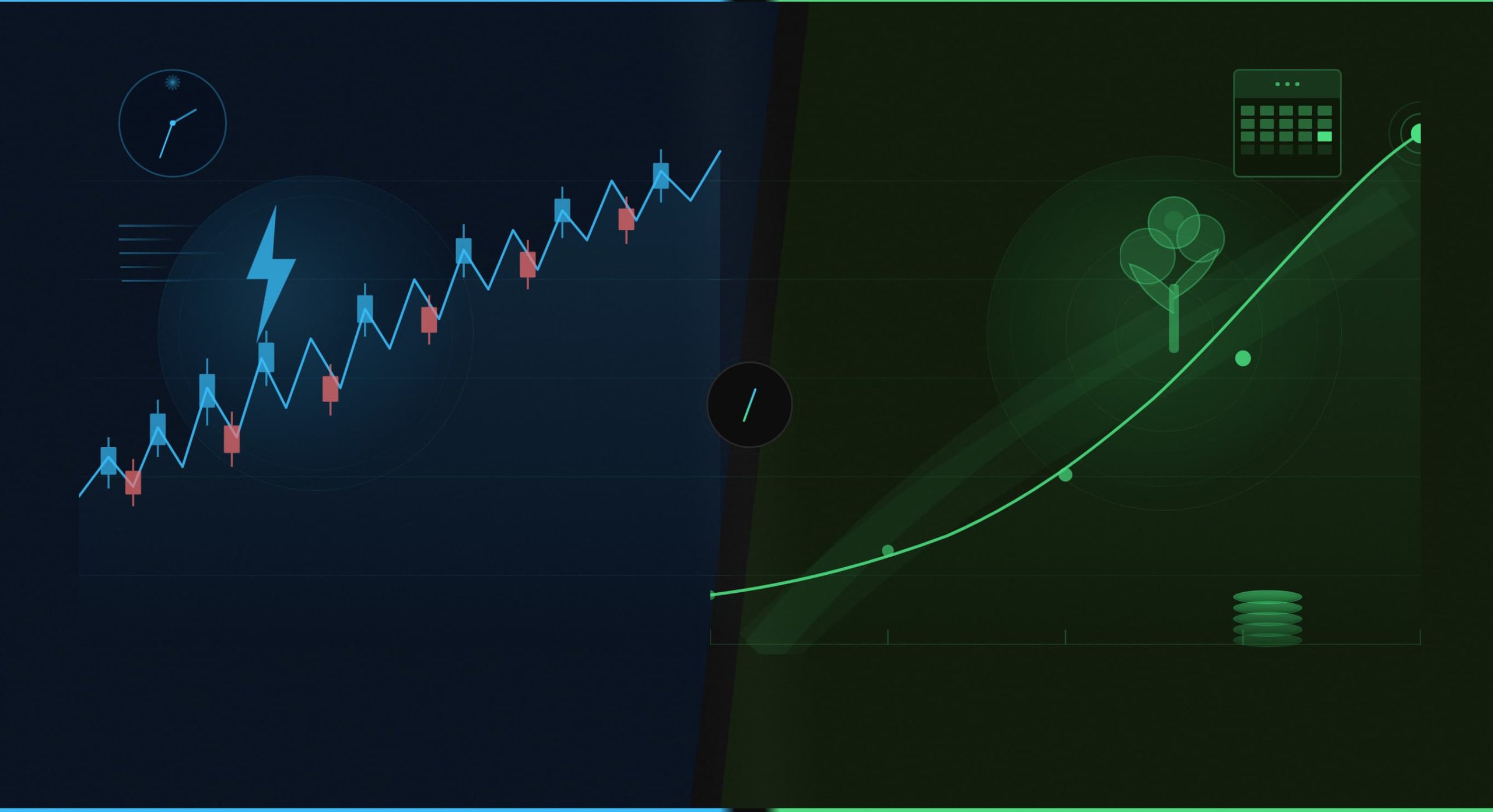
At ICunity, many beginners use the terms trading and investing interchangeably. While both involve financial markets and the goal of making money, they are actually very different approaches with different strategies, timeframes, and mindsets.
Are you ready to transform your financial future?
Sign Up TodayNo credit card required • Free demo account • Instant activation
Understanding the difference can help you choose the path that best fits your goals and personality.
What Is Trading?
Trading focuses on short-term price movements.
Traders aim to:
- Buy and sell assets quickly
- Profit from market fluctuations
- Take advantage of volatility
Trades may last:
- Seconds (scalping)
- Hours (day trading)
- Days or weeks (swing trading)
The goal is to generate profits from short-term market opportunities.
What Is Investing?
Investing focuses on long-term growth.
Investors typically:
- Buy assets and hold them for years
- Focus on company or economic growth
- Ignore short-term market noise
The goal is to build wealth gradually over time.
Key Difference #1: Time Horizon
Trading
- Short-term focus
- Frequent buying and selling
Investing
- Long-term focus
- Holding assets for years
Timeframe is one of the biggest differences between the two approaches.
Key Difference #2: Risk and Volatility
Trading generally involves:
- Higher short-term risk
- Faster decision-making
- Greater emotional pressure
Investing usually involves:
- More patience
- Lower trading frequency
- Long-term market confidence
Both carry risk—but the type of risk differs.
Key Difference #3: Strategy and Analysis
Traders Focus On:
- Technical analysis
- Price action
- Indicators and charts
- Market momentum
Investors Focus On:
- Company fundamentals
- Economic growth
- Long-term value
For example, investors may analyze companies like Apple Inc., while traders focus more on short-term price movement.
Key Difference #4: Market Activity
Traders:
- Spend more time monitoring charts
- React quickly to market changes
- May take multiple trades daily
Investors:
- Usually make fewer decisions
- Hold positions longer
- Focus less on daily market movement
The Role of News and Economics
Both traders and investors pay attention to economic events, but in different ways.
For example, decisions from the Federal Reserve can:
- Create short-term volatility for traders
- Influence long-term economic outlook for investors
Which Requires More Time?
Trading
Requires:
- Active monitoring
- Frequent analysis
- Faster execution
Investing
Requires:
- Patience
- Long-term thinking
- Less daily involvement
Trading is generally more time-intensive.
Profit Expectations
Trading
Potential for faster gains—but also faster losses.
Investing
Typically slower growth, but more stable over time.
Many successful investors like Warren Buffett built wealth through long-term investing rather than short-term trading.
Can You Do Both?
Yes. Many people:
- Invest for long-term wealth
- Trade for short-term opportunities
The two approaches can complement each other when managed properly.
Which Is Better for Beginners?
It depends on your personality and goals.
Trading may suit you if:
- You enjoy fast decision-making
- You like active market participation
- You can manage emotions well
Investing may suit you if:
- You prefer long-term growth
- You have patience
- You want less daily stress
Common Beginner Mistake
Many beginners:
- Enter trading expecting easy money
- Underestimate emotional pressure
- Ignore risk management
At the same time, some investors become impatient and constantly react to short-term market movements.
Understanding the difference helps avoid these mistakes.
Final Thoughts
At ICunity, we believe both trading and investing can be valuable paths depending on your goals, risk tolerance, and personality.
Trading focuses on short-term opportunities and active decision-making, while investing focuses on patience and long-term growth.
Neither is automatically better—the key is choosing the approach that matches your mindset and staying disciplined over time.