

What Is Forex Trading? A Beginner’s Simple Guide
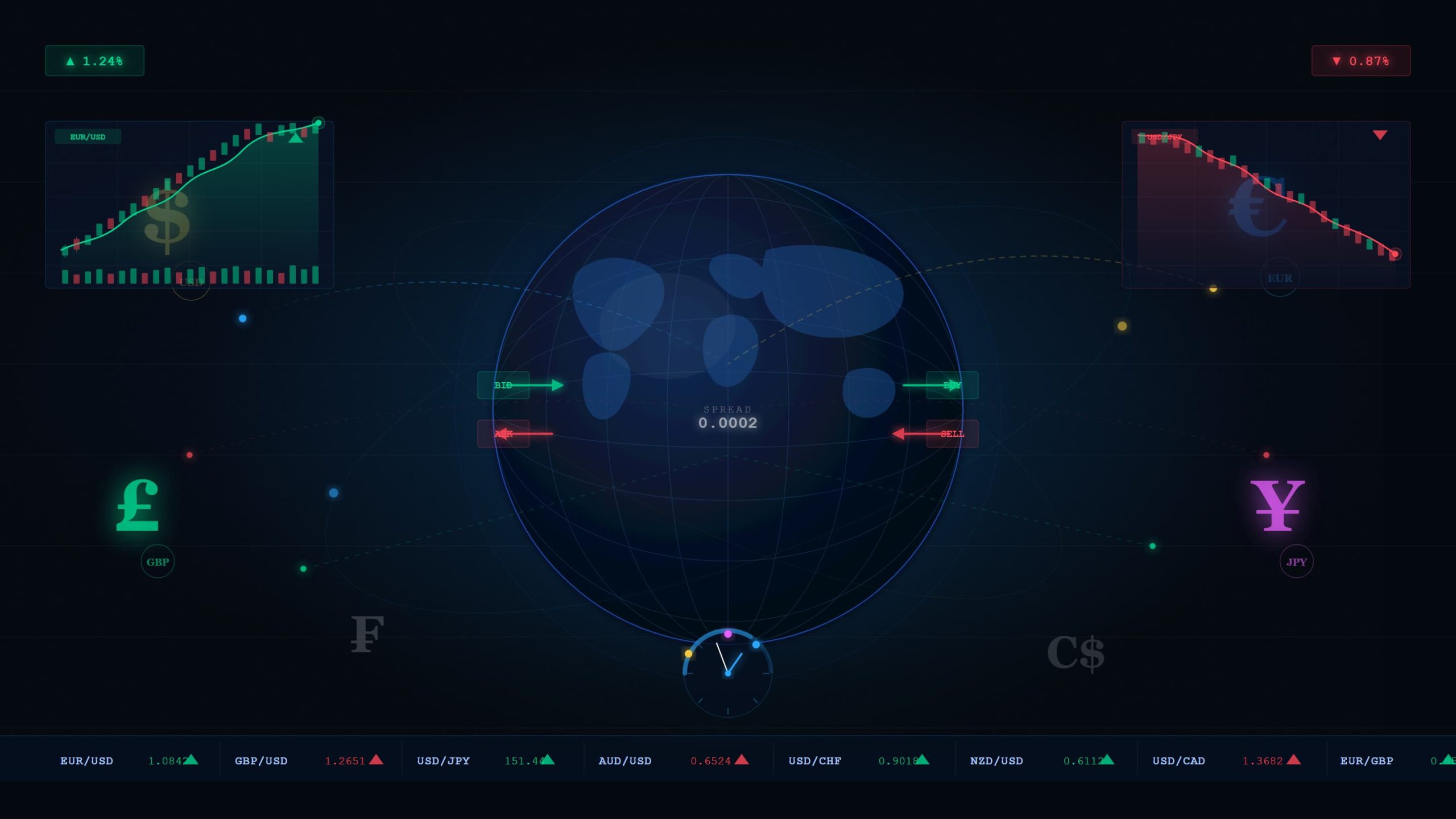
At ICunity, Forex trading is often the starting point for many people entering the world of financial markets. If you’re new, don’t worry—this guide will break everything down in a simple and easy-to-understand way.
Are you ready to transform your financial future?
Sign Up TodayNo credit card required • Free demo account • Instant activation
What Is Forex Trading?
Forex (Foreign Exchange) trading is the process of buying one currency and selling another at the same time.
Currencies are traded in pairs, such as:
- EUR/USD (Euro vs US Dollar)
- GBP/USD (British Pound vs US Dollar)
- USD/JPY (US Dollar vs Japanese Yen)
The goal is simple: profit from changes in currency prices.
How Does Forex Trading Work?
In Forex, you are always trading one currency against another.
Example:
- If you believe the euro will rise against the US dollar → you buy EUR/USD
- If you believe it will fall → you sell EUR/USD
Prices move based on supply and demand, which are influenced by global economic factors.
Who Trades Forex?
The Forex market is the largest financial market in the world, and it includes:
- Banks and financial institutions
- Governments and central banks
- Large companies
- Individual (retail) traders like you
For example, central banks like the Federal Reserve play a major role in influencing currency values.
Why Do Currency Prices Change?
Currency prices move because of:
- Interest rates
- Inflation
- Economic data
- Political events
- Market sentiment
For instance, if a country’s economy is strong, its currency usually becomes stronger.
Key Features of Forex Trading
1. 24-Hour Market
Forex runs 24 hours a day, 5 days a week, allowing you to trade anytime.
2. High Liquidity
There are always buyers and sellers, making it easy to enter and exit trades.
3. Leverage
You can control larger positions with smaller capital—but this increases risk.
4. Low Starting Capital
You can begin trading with a relatively small amount of money.
Basic Terms Every Beginner Should Know
- Pip: Smallest price movement in a currency pair
- Lot: Trade size
- Spread: Difference between buy and sell price
- Leverage: Borrowed capital to increase trade size
Understanding these terms is essential before placing trades.
Example of a Simple Trade
Let’s say:
- You buy EUR/USD at 1.1000
- Price rises to 1.1010
That’s a 10 pip gain—which translates into profit depending on your trade size.
Risks of Forex Trading
While Forex offers opportunities, it also involves risk.
Common risks include:
- Losing money due to market volatility
- Overleveraging
- Emotional decision-making
This is why risk management is crucial.
Tips for Beginners
- Start with a demo account
- Learn basic chart reading
- Use proper risk management (1–2% per trade)
- Avoid overtrading
- Focus on consistency, not quick profits
Final Thoughts
At ICunity, we believe Forex trading is a powerful skill—but it requires patience, discipline, and continuous learning. It’s not a shortcut to fast money, but a long-term journey of improvement.
If you take the time to understand how the market works and build strong habits, Forex trading can become a valuable opportunity.
Start simple, stay consistent, and grow step by step.