

Why Capital Protection Is More Important Than Profit
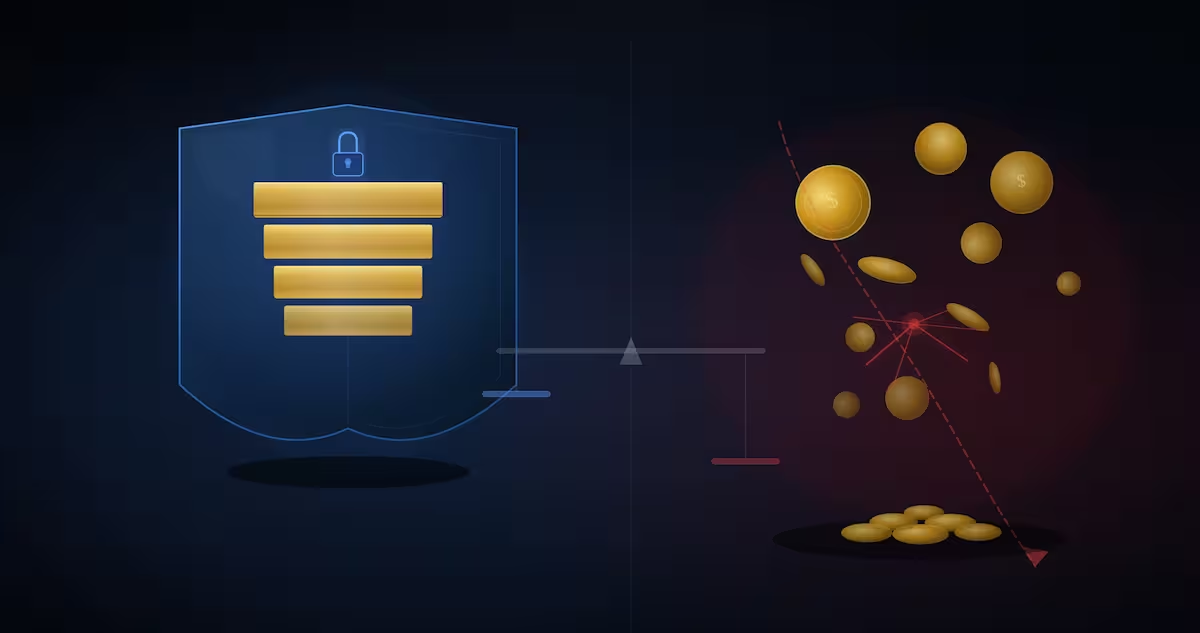
At ICunity, one of the most important lessons we share with traders is simple: protecting your capital should always come before chasing profits. Many beginners enter the markets focused entirely on how much money they can make, but experienced traders understand a different reality. Without capital, there are no future opportunities, no ability to recover from mistakes, and no long-term trading journey.
Are you ready to transform your financial future?
Sign Up TodayNo credit card required • Free demo account • Instant activation
Successful trading is not just about making money—it’s about staying in the game long enough to let your skills and strategies work over time.
What Is Capital Protection?
Capital protection refers to the process of preserving your trading funds by managing risk carefully and avoiding unnecessary losses.
It involves:
- Limiting risk on each trade
- Using stop-loss orders
- Controlling position sizes
- Avoiding excessive leverage
- Managing emotions effectively
The goal is to ensure that losses remain manageable and never become catastrophic.
Why Losing Money Hurts More Than Gaining It
One of the biggest challenges in trading is that recovering from large losses requires increasingly higher returns.
For example:
- A 10% loss requires an 11.1% gain to recover.
- A 20% loss requires a 25% gain.
- A 50% loss requires a 100% gain.
The larger the loss, the harder it becomes to return to your starting point.
This is why protecting capital is so important.
Survival Is the First Goal of Trading
Many traders believe the primary goal of trading is to make money.
In reality, the first goal is survival.
If you preserve your capital, you can:
- Continue learning
- Improve your strategies
- Take future opportunities
- Recover from setbacks
A trader who loses most of their account may never get the chance to apply what they have learned.
Professional Traders Think Differently
Professional traders often ask:
- How much can I lose?
- Is the risk acceptable?
- Does this trade fit my plan?
Beginners often ask:
- How much can I make?
This difference in mindset is significant.
Successful traders focus on protecting downside risk before considering potential rewards.
Risk Management Protects Capital
Good risk management is the foundation of capital protection.
Common practices include:
- Risking only a small percentage of capital per trade
- Setting maximum daily loss limits
- Diversifying exposure
- Maintaining realistic expectations
Risk management may not be exciting, but it is often what separates successful traders from struggling ones.
The Danger of Overleveraging
Leverage can increase potential profits, but it can also magnify losses.
Excessive leverage may lead to:
- Rapid account drawdowns
- Emotional decision-making
- Increased stress
- Difficulty recovering losses
Using leverage responsibly is essential for protecting capital.
Capital Gives You Flexibility
Preserved capital provides options.
When traders maintain healthy account balances, they can:
- Wait for better opportunities
- Trade with less emotional pressure
- Adapt to changing market conditions
- Continue developing their skills
Capital acts as a valuable resource that creates future possibilities.
Avoiding Emotional Trading
Large losses often trigger emotional reactions.
These may include:
- Revenge trading
- Fear of missing out
- Impulsive decisions
- Overtrading
Protecting capital helps reduce emotional pressure and encourages more rational decision-making.
Think Long Term
Trading is often a marathon rather than a sprint.
Long-term success usually comes from:
- Consistency
- Discipline
- Controlled risk
- Continuous improvement
Protecting capital allows traders to focus on the bigger picture rather than short-term results.
Every Trade Is Not Worth Taking
One of the best ways to protect capital is to be selective.
Professional traders understand that:
- Not every setup is high quality.
- Sometimes the best trade is no trade.
- Patience can prevent unnecessary losses.
Avoiding poor trades is often just as valuable as finding good ones.
Small Losses Are Part of the Business
Many traders fear losses.
However, losses are a normal part of trading.
The key is to:
- Keep losses small
- Accept them as part of the process
- Avoid turning small losses into large ones
Managing losses effectively is one of the most important trading skills.
Building Confidence Through Protection
Confidence does not come from taking large risks.
True confidence often comes from:
- Knowing your risk is controlled
- Having a clear plan
- Protecting your account
- Understanding that one trade cannot significantly damage your capital
This confidence can improve both decision-making and emotional discipline.
Profit Comes From Preservation
Ironically, focusing on capital protection often leads to better profitability.
When traders:
- Avoid large losses
- Remain disciplined
- Stay in the market longer
they give themselves more opportunities to benefit from favorable market conditions.
Profitability often becomes a byproduct of good risk management.
The Mindset of Successful Traders
The most successful traders understand one simple principle:
Protect first, grow second.
Their priorities are usually:
- Preserve capital.
- Manage risk.
- Execute consistently.
- Let profits develop over time.
This mindset helps create sustainability in trading.
Final Thoughts
At ICunity, we believe capital protection is the true foundation of long-term trading success. Profits are important, but they become meaningless if poor risk management leads to devastating losses. The ability to preserve capital gives traders the opportunity to learn, improve, and remain active in the markets over time.
Successful trading is not about winning every trade or making quick fortunes. It is about managing risk wisely, protecting your resources, and creating the conditions for sustainable growth. In the world of trading, the traders who survive and protect their capital are often the ones who ultimately achieve consistent success.